Vol. 11 - 9.22.26
The Human Advantage · September 2026 · Volume 11
Who’s Helping You Define the Next Frontier of Possible?
A NOTE FROM RAFAT

Rafat opens the September issue with a question about who shapes what—and how—we learn as AI becomes part of everyday work.
Rafat here!
I’ve been thinking about something simple: who you allow into your headspace shapes your vision, imagination of what is possible.
We talk a lot about learning AI—new tools, new skills, new ways of working. We talk less about the inputs surrounding that discovery: whose history we hear, what explanations make the technology click, and which experiences help us see where it belongs in our personal spaces.
Despite what popular news would have us believe, AI did not suddenly appear in 2022 with the launch of ChatGPT. The field has been building for generations. Most of us are only now developing a direct relationship with it—and we are entering a story already shaped by decades of ideas, decisions, institutions, and people.
So this month, we’re widening the lens: understanding how we got here, paying closer attention to the voices helping you make sense of it, and becoming more intentional about who and what we allow into our learning mixing pot.

Who and what we allow into our learning environment shapes the lens we bring to what comes next.
AI: The Overnight Success 70 Years in the Making
The breakthrough feels sudden because most of the build was invisible to us.
If we date the formal birth of artificial intelligence to the 1956 Dartmouth workshop, the field turns 70 years old in 2026. The technologies we now experience as conversation, copilots, and agents sit on top of generations of work in probability, logic, computing, machine learning, language, and infrastructure.
In the new article, I trace six thresholds that help make that evolution easier to see:
STRUCTURE → IDENTITY → LEARNING → CONTEXT → ACCESS → ORCHESTRATION
The point is not to memorize a timeline. It is to recognize that every layer expanded what became possible—and that today’s rapid expansion of access changes who can participate in what becomes our shared future.
As access widens, the range of people shaping AI’s future becomes more important.
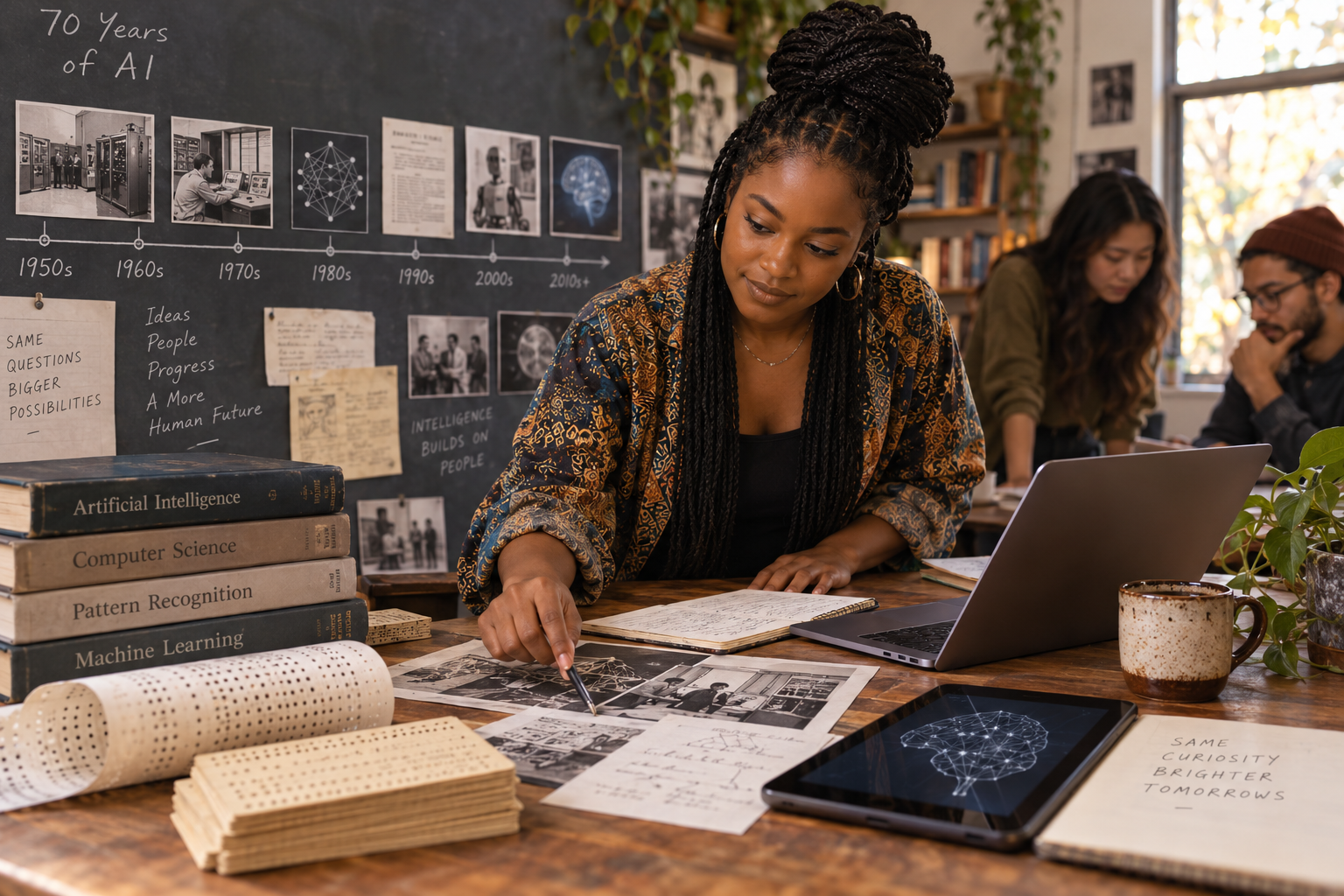
The technology feels sudden. The human work behind it spans generations.
🔊 A Few Voices in My Rotation

A strong learning rotation grows when we intentionally learn across voices, communities, and lived experiences.
One practical way to widen the inputs around you is to notice who keeps making you smile while dropping wisdom inside your own learning rotation. A few from mine:
Kedasha Kerr — That LadyDev | Tech Education
I found Kedasha while learning more about vibe coding. She has a gift for moving new builders past the shiny front end and toward the questions that matter underneath it—architecture, data, security, and choosing the right tools for the job.
And For the Culture…
I also keep a couple of tech podcasts in rotation because how technology is discussed matters. The Tech Jawn and The Techtual Talk Podcast bring voices, references, and experiences that feel closer to home while I think about how AI learning and career access reach more communities.
Experience the Shows:
🎧 This Month’s Project: Curate the Voices That Shape Your Learning Experience

AI can help you navigate a bigger catalog. You still decide which sources, perspectives, and communities belong in your learning environment.
Immersion is a powerful tool when you’re learning something new. But what you immerse yourself in matters, too.
This month, use AI to curate podcasts, audiobooks, interviews, articles, and other published work around one topic you want to understand more deeply.
Then go beyond the usual “best of” recommendations.
Ask for voices that reflect your industry, culture, community, lived experience, geography, or the people you serve.
The goal is simple:
Build a learning feed that helps you understand the topic—and see yourself and your world inside it.
Build your curated learning list →
Before you go…

More information does not automatically create more wisdom. Discernment is still human work.
This month isn’t about allowing everything and everyone into your space. It is about becoming more deliberate about what enters your thinking.
Algorithms will always influence what gets surfaced first. But we can still choose to look beyond the first answer, follow people who make complex ideas easier to digest, and intentionally add perspectives from our fields, communities, cultures, and lived experiences.
AI can help organize the catalog. You still decide what deserves your attention.
-Rafat
P.S.
Hit reply with one creator, podcast, researcher, or voice you think I should add to my own learning list. I’d love to hear who’s shaping how you think right now.

Who belongs in your learning rotation? Hit reply and send me a voice I should know.
H.E.A.L. · Health Equity Advocacy League Build along with us.Join our free H.E.A.L. community and stay connected with practical ideas, tools, and learning resources as we work toward healthier, more equitable communities. |